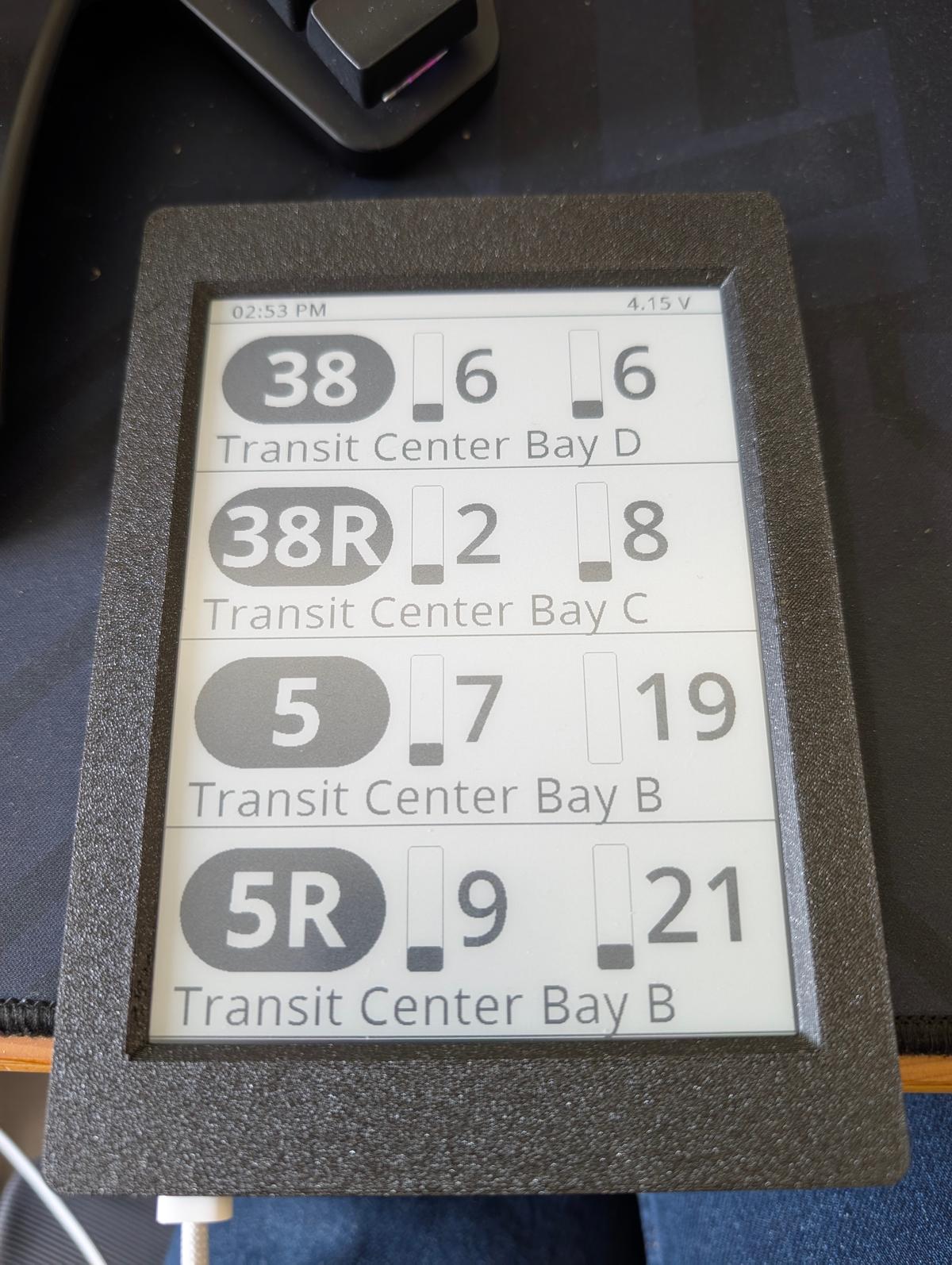
I am fortunate enough to live near several (fully funded!) bus lines in San Francisco. When running out the door in the morning, knowing which ones are coming first is really handy. E-ink displays are fairly affordable and require no power to display static content, so one of those seemed perfect to mount in my hallway that happened to contain no wall outlets at all. So, I picked one up and got to work on it.
After a couple days of remembering how C works, I got it looking great and working well. Unfortunately, parsing 30 MB of JSON on an embedded CPU is very hard on the battery, and it only lasted a couple days before needing a charge. A proxy to filter out the irrelevant parts of the response helped, but I could still only get a week or two out of it before it needed charging. It was much more efficient than an LCD, but even with partial updates this use case just does not work well for this hardware. So, my thoughts turned to other ways to make it truly useful.
The idea of a display on a wall to control a smart home goes back at least as far as 1985, and as a proud owner of a Homeassistant setup I have spent way too much time on, setting one of those up seemed like a fun project. The most common way to implement this is to mount an old iPad on the wall and simply run the first-party app on it, but again the lack of power in my hallway ruled that out. But, I had an unused e-ink display sitting around, why not give it a try?
The device I chose actually doesn't have any input methods -- no touchscreen or capacitive buttons or anything. This ruled out most of the use cases such as using it as a thermostat, light switch, or other such controller roles, and the relatively expensive screen redraws precluded anything that needed real-time updates. Not much was left, so I settled on displaying the weather forecast and the next event on my partner and my shared calendar. Not super exciting, but helpful given our propensity to forget appointments until shortly before it was time to leave as well as SF's funny way of making you forget that the weather is, in fact, not completely static.
Most of the bus tracker code was reusable. I just swapped out the JSON parsing and on-device drawing with some code to simply display an image from a URL. A few more hours of C and a Docker container later, I had something that worked pretty darn well:
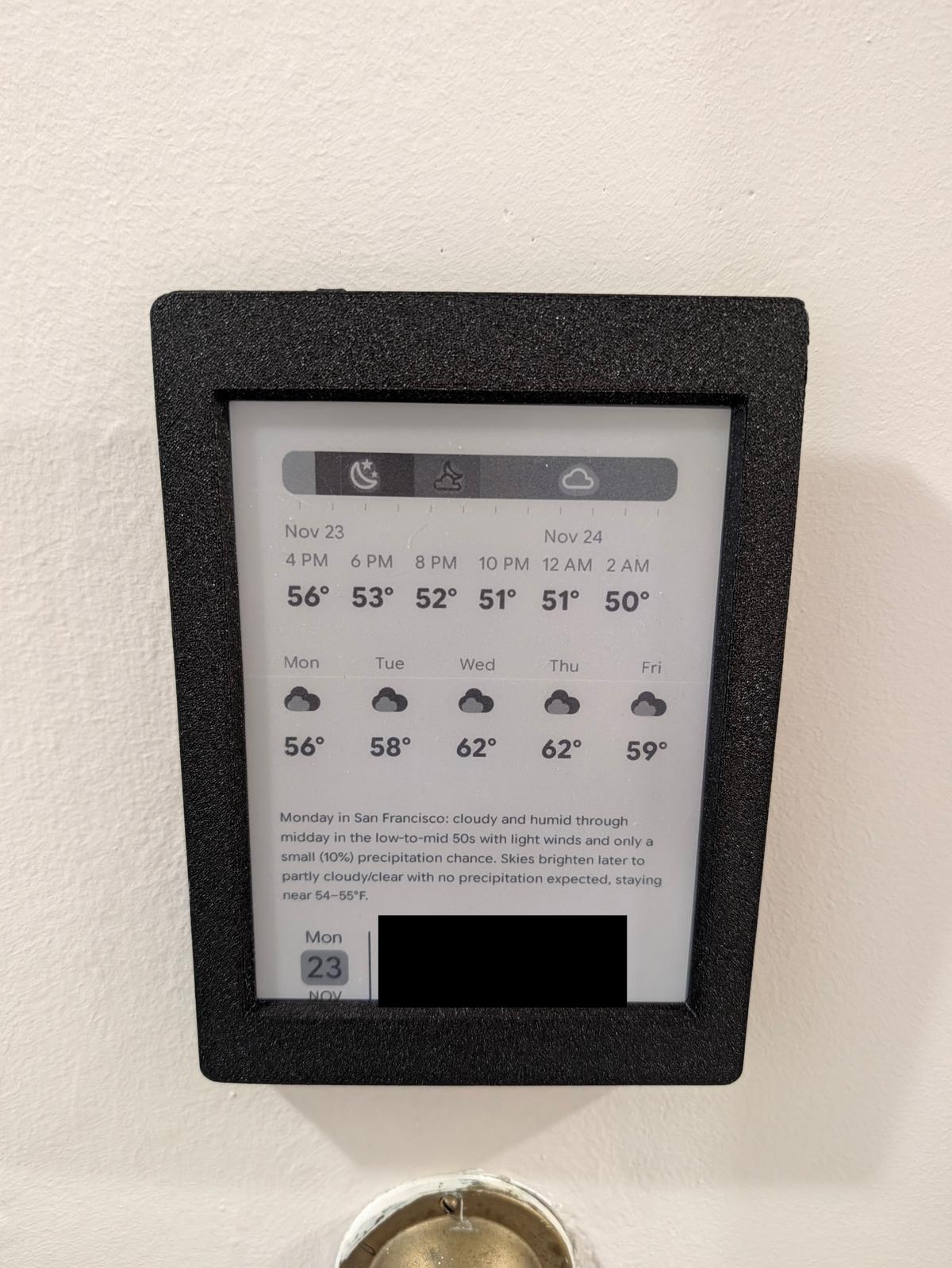 No peeking at my calendar ;)
A year and half later, it's still hanging in my hallway! Most of my little adventures end up thrown back into the Box of Misfit Computer Hardware, so I'm happy that this one stayed. Especially since it cost like $150 wtf
0 AI used, btw :) coding is fun and the act of building is 99% of the fun of any worthwhile side project imo, so no point in outsourcing the joy to a clanker that won't appreciate it.